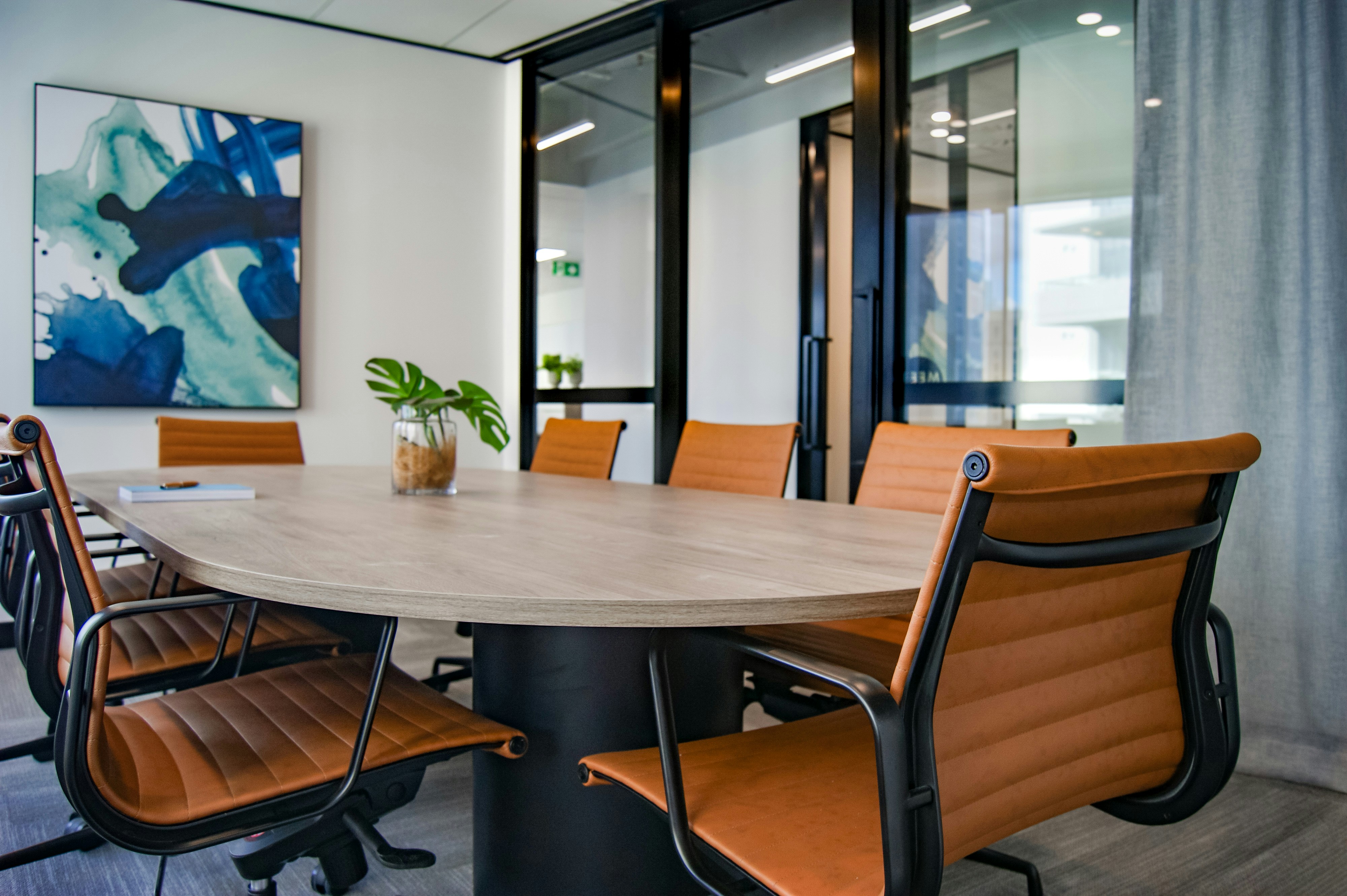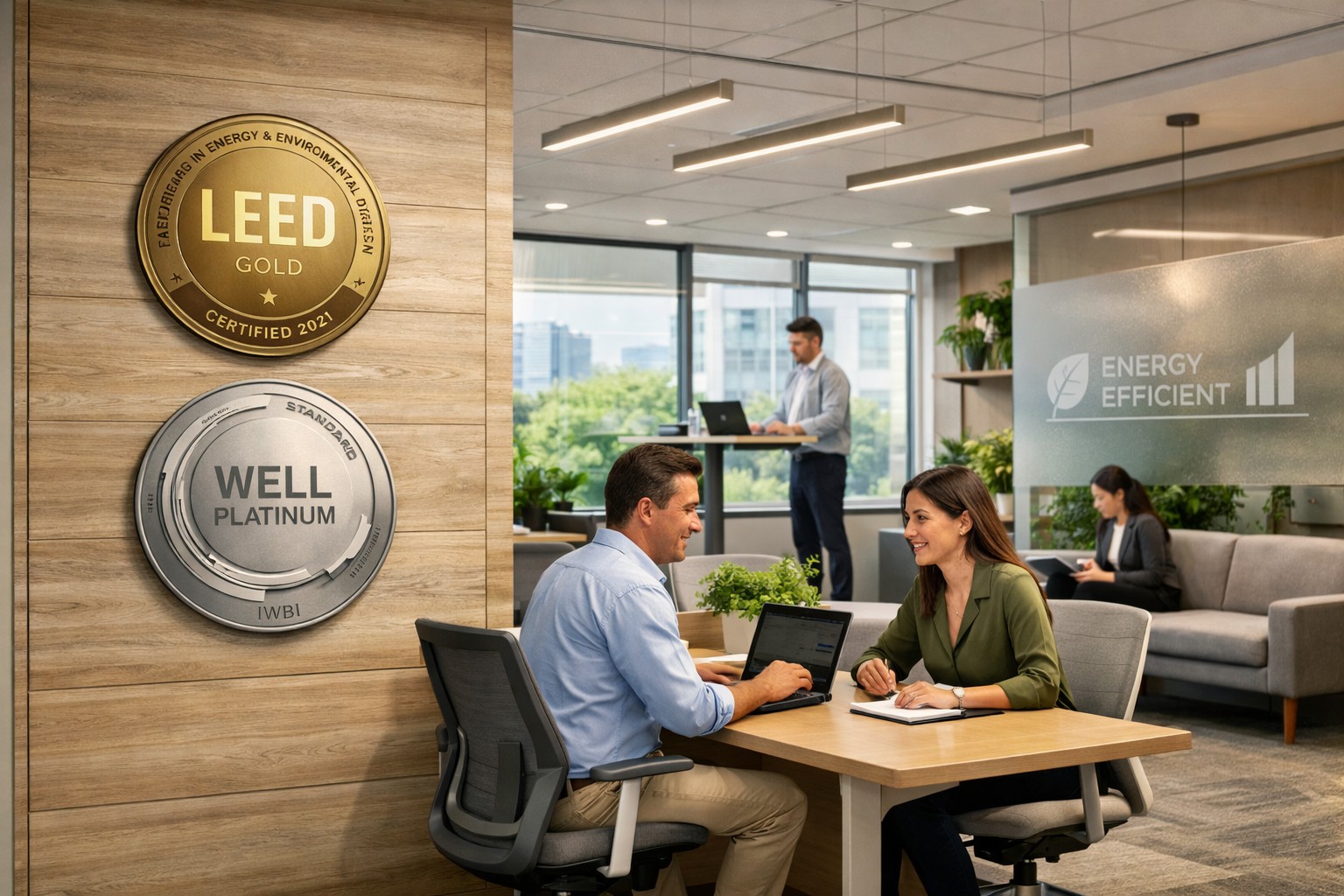
Step into a truly sustainable workspace—where eco-conscious materials, energy-efficient systems, and biophilic design converge to reduce environmental impact while elevating human well-being and productivity.
1. The Office That Breathes
Designing Workspaces That Heal the Planet — and the People Inside Them — step into most modern offices and you'll see glass walls, minimalist desks, a statement light fixture dangling like art. Beautiful? Often. Responsible? Not always.
For decades, the workplace has been designed to impress clients and signal status. Now, it faces a sharper question: What does a truly sustainable green office interior look like — and why does it matter right now?
The shift is subtle but seismic. We are moving from the aesthetic office to the ethical office. From spaces designed to be seen, to spaces designed to behave — responsibly, intelligently, sustainably.
Climate change is not a headline; it's a boardroom discussion. Corporate responsibility is no longer a CSR slide; it's embedded in ESG targets and investor scrutiny. Buildings account for a significant share of global carbon emissions, and offices — with their lighting, HVAC systems, and material-heavy interiors — play a decisive role.
But here's where the narrative deepens: sustainable offices are not only about the planet. They are about people.
Natural light improves circadian rhythms. Cleaner air reduces fatigue. Biophilic elements lower stress and sharpen focus. Employees working in healthier environments consistently report higher satisfaction and productivity. In other words, sustainability is not sacrifice — it's performance.
A truly sustainable green office interior integrates eco-conscious materials, energy-efficient systems, biophilic design, and measurable performance standards. It reduces environmental impact while actively elevating human well-being. The office, when designed correctly, doesn't merely function. It breathes.
2. Defining Sustainable Green Office Interiors
Before we romanticize the idea, we need clarity. If sustainable design is the philosophy, then implementation is where it proves itself. In interior design, "sustainable" does not mean placing a few plants in the corner or choosing a recycled desk and calling it a day. Sustainability is not décor — it is strategy.
At its core, sustainable green office design operates on a dual focus:
- Environmental responsibility — reducing resource consumption, carbon emissions, and material waste.
- Human-centered design — improving air quality, comfort, mental wellness, and productivity.
This is achieved through three pillars:
- Eco-Friendly Materials — Renewable, recycled, responsibly sourced materials that minimize deforestation, landfill waste, and harmful emissions.
- Energy-Efficient Systems — LED lighting, smart sensors, efficient HVAC systems, insulation upgrades, and renewable integrations.
- Biophilic Design — Natural light, indoor greenery, organic textures, and visual connections to nature that support well-being.
Greenwashing has made sustainability look easy. But real sustainable interiors are measurable. They reduce energy by tangible percentages. They cut waste significantly. Sustainability isn't a style. It's a systems mindset.
3. Core Principles of Green Office Design
3.1 Resource Conservation Through Smart Design
The most sustainable energy is the energy you never use. Maximizing natural light is where it begins — large windows, glass partitions, skylights as strategic tools. When daylight floods a workspace, artificial lighting retreats. Electricity consumption drops. Circadian rhythms stabilize.
Instead of blanket illumination, lighting becomes targeted, responsive, sensor-driven. Spatial planning allows daylight to penetrate deeper and natural airflow to circulate freely. Smart design is less about adding more, and more about wasting less.
3.2 Biophilic Integration
Humans are not built for sealed boxes of concrete and glass. Indoor plants and living walls are environmental tools — they absorb CO₂, improve air quality, and soften sterile edges. Views of nature reconnect employees to something beyond screens and deadlines.
Studies consistently show that biophilic environments reduce anxiety, sharpen concentration, and enhance overall well-being. When nature is invited inside, performance follows.
3.3 Adaptive & Human-Centered Layouts
A sustainable office acknowledges that people work differently. Open layouts with flexibility encourage collaboration. Organic patterns and textures introduce warmth. Thermal comfort with localized control ensures employees aren't trapped in a one-temperature-fits-all system.
Sustainable offices balance collaboration zones with quiet zones. Responsive design aligns the built environment with human behavior.
4. Sustainable Materials: Building With Intention
Materials are the silent storytellers of any interior. They reveal where resources were extracted, how much energy was consumed, and what impact was left behind. Every surface carries consequence.
4.1 Renewable & Responsible Materials
- Bamboo — grows rapidly, regenerates without replanting, durability comparable to hardwood.
- Cork — harvested without damaging the tree, one of the most renewable flooring options.
- Reclaimed wood — gives existing materials a second life.
- FSC-certified timber — ensures responsible forest management and traceable sourcing.
4.2 Circular & Recycled Solutions
Recycled upholstery fabrics transform post-consumer waste into functional surfaces. Second-hand or refurbished furniture extends product lifecycles. Every reused desk diverts material from landfills. Circular thinking reframes design from linear consumption to continuous use.
4.3 Low-Emission & Health-Focused Materials
VOC-free finishes and low-emission adhesives prevent harmful off-gassing — a major contributor to poor indoor air quality. Cleaner materials mean fewer headaches, fewer respiratory issues, and fewer long-term health risks. A conventional office may look impressive on day one. A sustainable office performs — year after year.
5. Energy Efficiency: The Engine Behind Sustainability
If materials are the bones of a green office, energy systems are its pulse. Energy efficiency is where sustainability moves from intention to measurable impact. And here's the truth: energy efficiency is not just about reducing carbon — it's about reducing cost.
5.1 Lighting Innovation
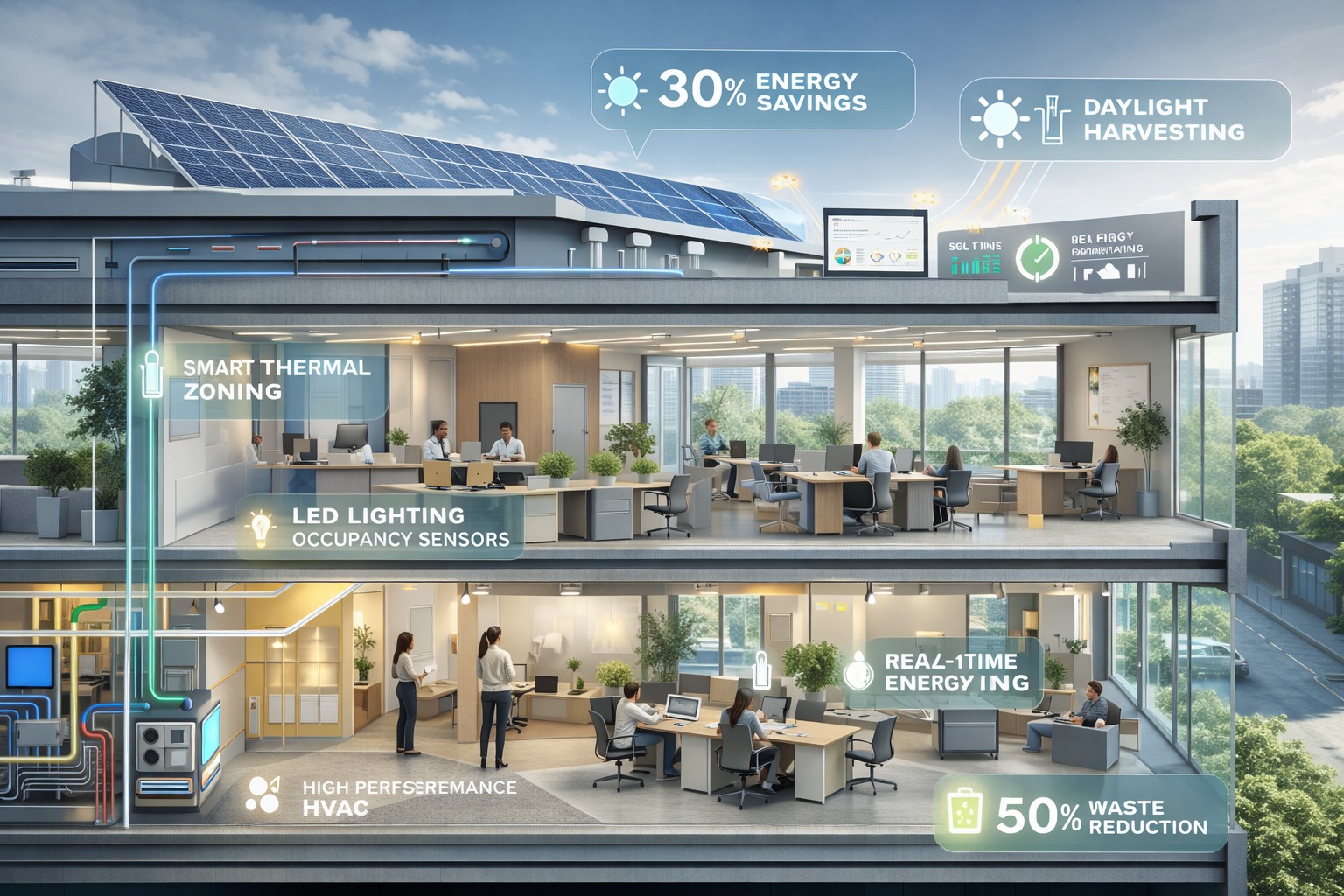
Lighting is one of the largest energy consumers in office environments. LED systems dramatically outperform traditional lighting. Occupancy sensors ensure lights operate only when spaces are in use. Daylight harvesting systems adjust artificial lighting based on natural light availability. Combined, these systems can reduce lighting energy consumption by up to 70%.
5.2 Climate & Appliance Efficiency
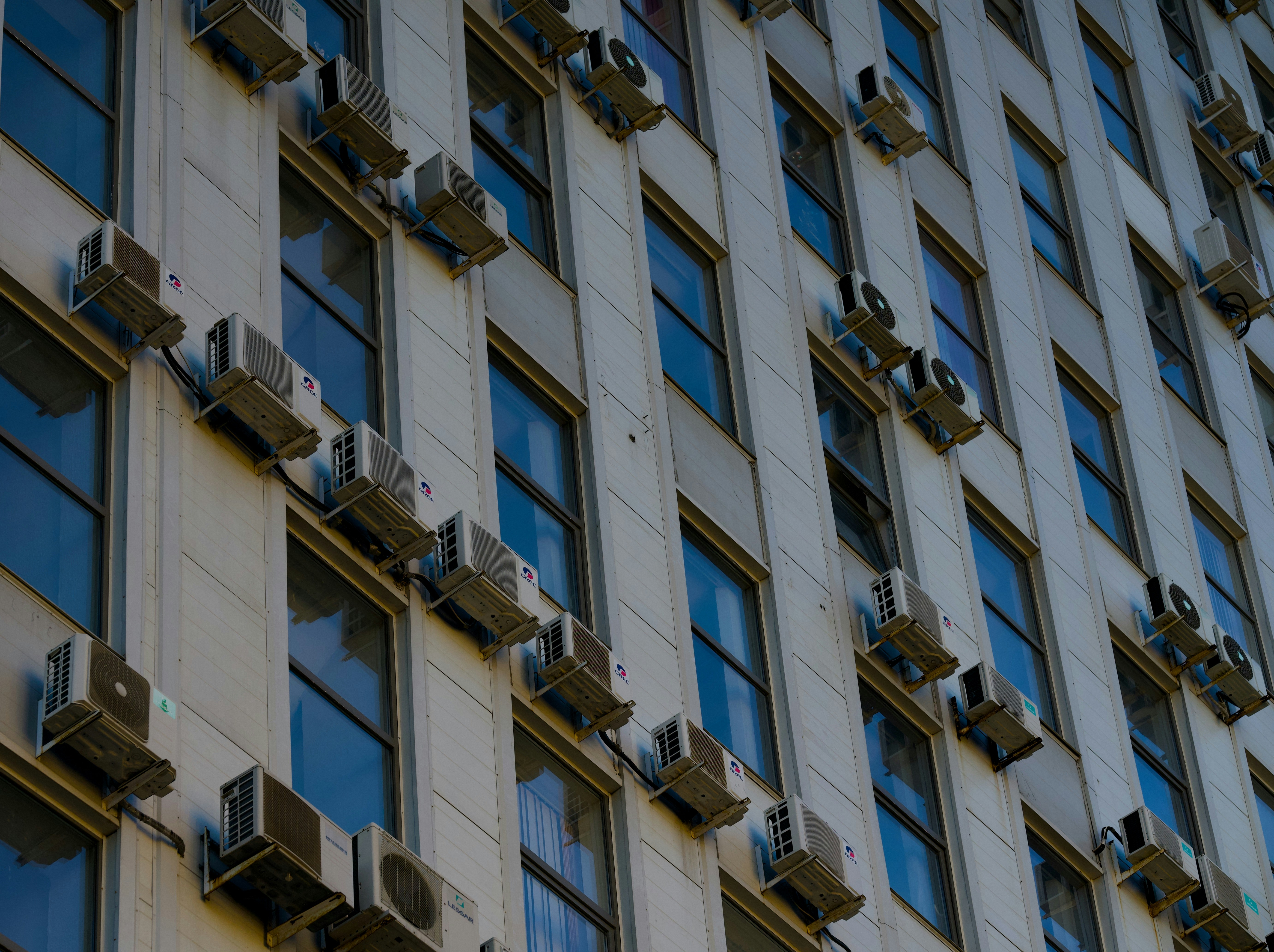
High-performance HVAC systems maintain comfort while consuming significantly less energy. Smart thermal zoning divides spaces into zones based on usage and occupancy — a crowded conference room doesn't share the same climate load as a storage area. Efficiency is not about compromise. It is about precision. For how HVAC system choice and sizing affects this, see our commercial HVAC systems guide.
5.3 Renewable Integration & Automation
Solar panels offset electricity demand. Enhanced insulation improves thermal retention. Smart automation systems monitor lighting, HVAC, and occupancy in real time, adjusting settings automatically. Sustainability is not an expense line — it is an efficiency strategy.
6. Certifications That Validate Green Performance
Design intentions are powerful. But without verification, they remain claims. Standards turn intention into accountability.
6.1 LEED (Leadership in Energy and Environmental Design)
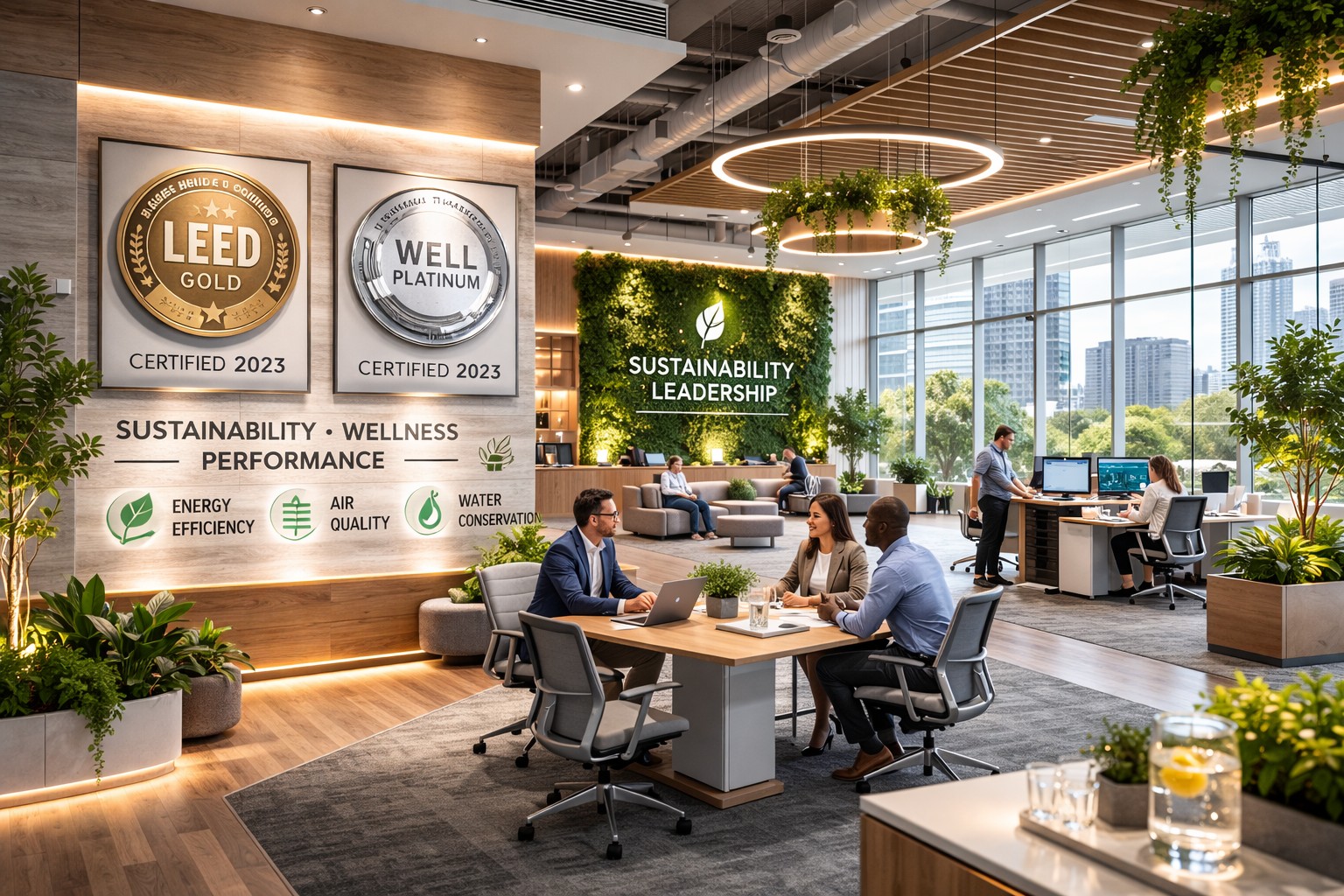
LEED, administered by the U.S. Green Building Council, evaluates sustainability across energy performance, water efficiency, materials selection, and indoor environmental quality. Certification tiers: Certified, Silver, Gold, Platinum. Beyond environmental impact, LEED enhances property value, strengthens investor confidence, and improves marketability.
6.2 WELL Building Standard
WELL, administered by the International WELL Building Institute, evaluates air quality, lighting conditions, thermal comfort, acoustic performance, nourishment, and mental well-being. Many organizations pursue both LEED and WELL certification — combining environmental sustainability with human-centered wellness.
6.3 Why Certification Matters
- Verified credibility — sustainability claims backed by independent evaluation.
- Competitive differentiation — a clear edge in attracting talent and clients.
- Corporate ESG alignment — measurable contributions to sustainability goals.
7. Measurable Benefits: Beyond Aesthetics
Green offices are not about mood boards and moral statements. They are about metrics. Sustainability is no longer a cost. It's leverage.
7.1 Environmental Impact
Reduced energy consumption, lower carbon emissions, minimized material waste, and improved water efficiency — all measurable outcomes of well-executed sustainable design.
7.2 Human Performance Gains
Cleaner indoor environments lead to better air quality, fewer sick days, reduced stress, and enhanced cognitive clarity. Teams collaborate more effectively. Concentration improves. The office becomes not just a place to work, but a place that works for its people.
7.3 The Business Case
- Operational savings from reduced energy and maintenance costs.
- Talent attraction as employees prioritize purpose-driven, healthy workplaces.
- Brand reputation strengthens where sustainability influences client and investor decisions.
- Long-term ROI: lower energy bills, lower absenteeism, higher retention, stronger ESG positioning.
8. Case Studies: Sustainability in Action
Theory is persuasive. Reality is definitive.
8.1 The Edge, Amsterdam
Built around advanced smart building technology, The Edge uses real-time data to optimize lighting, temperature, and energy consumption. Employees interact with the building through apps that personalize workspace settings. It does not simply claim sustainability — it measures it continuously.
8.2 Pixel Building, Melbourne
Pixel Building demonstrates carbon neutrality in practice — integrating solar and wind energy systems while harvesting rainwater to minimize water waste and reinforce resource independence.
8.3 Amazon's 2.1M sq ft Sustainable Office
Low-carbon concrete reduced embodied emissions. Green roofs enhance insulation, manage stormwater, and improve biodiversity. Environmental commitment executed at corporate scale.
8.4 ASID Headquarters (Dual LEED + WELL Platinum)
The ASID headquarters achieved dual LEED and WELL Platinum certification — prioritizing verified air quality, material transparency, and human-centered performance standards. Proof that healthier interiors produce measurable performance gains.
9. How to Implement Sustainable Green Office Interiors
Grand visions are inspiring. Execution is transformative. Start small. Scale intelligently.
- Audit Current Energy and Material Usage
Conduct a thorough audit of energy consumption, lighting systems, HVAC performance, and material sourcing. You cannot improve what you do not measure.
- Integrate Biophilic Elements Early
Plan for maximized daylight access, indoor greenery, visual connectivity to nature, and airflow improvements. Nature should be structural, not symbolic.
- Choose Certified Sustainable Materials
Opt for FSC-certified timber, bamboo, cork, recycled furnishings, and low-emission finishes. Materials are investments — choose them as such.
- Invest in Smart Energy Systems
Upgrade to LED lighting with occupancy sensors, smart thermal zoning, high-performance HVAC, and renewable integrations like solar.
- Aim for Certification
Pursuing LEED or WELL introduces accountability and transforms internal ambition into externally verified achievement.
- Track and Report Performance Metrics
Monitor energy savings, waste reduction, indoor air quality, and employee satisfaction. Progress should be measurable, not anecdotal.
10. The Future of Green Office Interiors
Integration with ESG Mandates
ESG mandates are reshaping corporate decision-making. Green interiors will increasingly be evaluated not just for aesthetics, but for compliance, performance, and transparency.
Tech-Driven Performance Tracking
Sensors, AI-driven building management systems, and real-time analytics will continuously optimize lighting, climate, and energy flow. Sustainability will become dynamic — measured daily, not annually.
The Rise of Regenerative Design
The next frontier moves beyond "doing less harm." Regenerative design aims to create offices that actively restore ecosystems — generating renewable energy, harvesting water, and improving biodiversity.
Offices as Wellness Ecosystems
- Spaces that regulate light for circadian alignment.
- Materials that enhance air purity.
- Layouts that balance collaboration with mental restoration.
11. Conclusion: Designing Workspaces That Give Back
A sustainable green office interior is not simply about reducing damage. It is about redefining responsibility.
It is about creating environments that:
- Consume less energy and resources
- Emit less carbon into the atmosphere
- Waste less material across their lifecycle
- And elevate more — more well-being, more productivity, more long-term value
Sustainability, at its highest level, is strategic leadership. It signals foresight, accountability, and respect — for employees, for communities, for the planet.
The offices we design today will shape the habits, performance, and environmental footprint of tomorrow. The question is no longer whether we can afford to build sustainably. The question is whether we can afford not to.
Frequently Asked Questions
Related Topics
Share this article
Dhruv Agarwal
Founder & Managing Director, Hagerstone International
Writes on sustainable office design, corporate interiors, ESG workplace strategy, and green building certifications across India for Hagerstone International.
.jpeg)